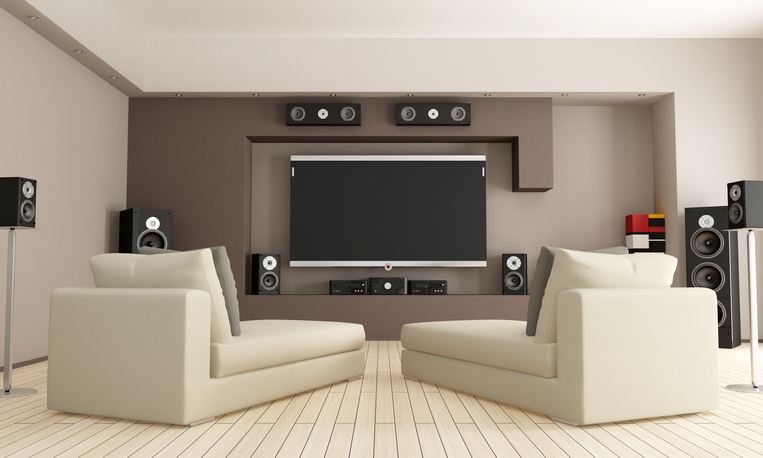
Whether you’re a huge movie buff or just a casual fan, having your very own…

Speaker placement comes down to controlling the variables you can and mitigating the factors you can’t. Unless you plan on completely renovating your room, working with what is available to you is important. From first steps to final adjustments, we run through how to get the level of clarity and balance you want.
At Paul Money Hi-Fi, we regularly see systems transformed simply by adjusting where and how speakers are placed. Our quick-start placement guide explains the key principles of optimal speaker placement and how to apply them in real New Zealand homes. Read on to learn how to get help with your hi-fi setup.
Start by Deciding the Listening Position
Before thinking about where your speakers should go, it’s important to establish where you’ll mostly be listening to music. The speakers should cater to your comfort and habits, not the other way round. Think about where you’ll spend most of your time enjoying music, and this will be the reference point for all placement decisions.
Ideally, this position should be centred between the two speakers and not pressed hard against a rear wall, as this can exaggerate bass and reduce clarity. Once a listening spot and zone are locked in, it becomes much easier to achieve consistent balance and imaging. Note that this may change in the future, but deciding on one at the start is the best way to begin optimising your speaker placement.
Get the Speaker Height Right
Speaker height plays a major role in how natural and coherent a system sounds. For most designs, the tweeter should be positioned at or near ear level when you’re seated in your usual listening position. If the tweeter is too high or too low, high frequencies can lose clarity and integration with the rest of the sound.
Height discrepancies are why bookshelf speakers generally perform best on dedicated stands, while floorstanding speakers benefit from appropriate seating height and careful positioning.
Distance From Walls Matters More Than You May Anticipate
How close your speakers are to walls has a significant influence on bass performance and overall balance. When speakers are placed too close to the rear or side walls, bass frequencies can become exaggerated and muddy, masking detail in the midrange. Allowing some space behind and to the sides of the speakers helps the sound develop more naturally, improving clarity and depth. Rear-ported speakers are particularly sensitive to this, making careful placement even more important.
Toe-In: Choosing Straight Ahead or Angled In
Toe-in refers to angling the speakers slightly toward the listening position, and it can have a noticeable effect on focus and imaging. A small amount of toe-in often sharpens the centre image and improves detail, particularly with vocals. Too much toe-in, however, can make the soundstage feel narrow or overly forward. The ideal angle depends on the speakers, the room and personal preference, so it’s worth experimenting gradually and listening carefully.
Making Extra Adjustments for Your Room
Every room has its own acoustic character, influenced by size, ceiling height, flooring and furnishings. Hard surfaces tend to reflect sound, while softer materials absorb it, affecting brightness, clarity and decay. If a system sounds overly bright or echoey, adding soft furnishings can help tame reflections. If it sounds heavy or indistinct, speaker placement and wall distance are often the first things to revisit. The goal isn’t perfection, but a balanced sound that suits both the room and your listening preferences.
Quick-Fire Speaker Placement Tips
- Use proper speaker stands for bookshelf speakers to ensure the tweeters sit at ear level when you are seated.
- Avoid placing speakers directly in corners, as this exaggerates bass and reduces clarity across the rest of the frequency range.
- Position both speakers the same distance from your main listening position to maintain proper stereo balance and imaging.
- Leave space around each speaker, avoiding shelves or other pieces of large furniture that can obstruct sound dispersion.
- Make modest placement adjustments first before making bigger moves, as even a few centimetres can dramatically change the sound.
- Soft furnishings such as rugs, curtains and sofas can help reduce harsh reflections in rooms with hard floors and bare walls.
- Aim for a symmetrical layout where possible so both speakers interact with the room in the same way.
- Avoid placing one speaker near a window and the other near a solid wall, as uneven reflections can produce a distorted stereo image.
The Best Gear and Personal Advice From Hi-Fi Specialists
There is no single speaker placement that works perfectly for every system or room. That’s why experienced advice can make such a difference. At Paul Money Hi-Fi, we help customers across New Zealand achieve the best possible performance from their systems through practical guidance and careful listening. Expert input can help unlock performance you may not realise is already there.
Ready to get the most out of your speakers? Or maybe it’s time to finally purchase that new audio system you’ve been eying. Browse our extensive curation of high-fidelity stereo systems, or get in touch to learn more about our installation services.
Related News